The Australian international has authorized AI digital doppelgangers, and athletes have turned on portrait rights to commercialize AI.澳国脚授权 AI 数字分身,运动员开启肖像权 AI 商业化
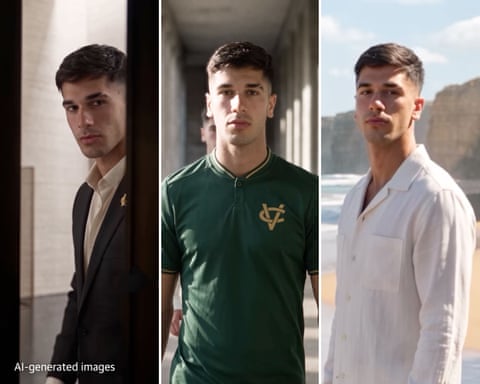
IT House news on October 25th, the Australian national men's football team star walked in the spacious atrium, looking straight at the camera, football shoes stepped on the smooth concrete floor, and footsteps echoed around. Suddenly, he became four digital doppelgangers, each scattered and reappeared in different scenarios around the world when...
IT之家 10 月 25 日消息,澳大利亚国家男子足球队球星走在宽敞的中庭里,目光直视镜头,足球鞋踩在光洁的混凝土地面上,脚步声在四周回荡。突然间,他变出四个数字分身,各自散开,再出现在全球不同场景当…
Key Points要点速览
IT House news on October 25th, the Australian national men's football team star walked in the spacious atrium, looking straight at the camera, football shoes stepped on the smooth concrete floor, and footsteps echoed around. Suddenly, he turned into four digital doppelgangers, each scattered and reappearing in different scenes around the world. IT House noticed that the video, which was spread on social platforms, was a fake image generated by artificial intelligence, but the prototype of the video, Cristian Volpato, a 22-year-old footballer, himself authorized the production of the content, and he is also the latest professional athlete to monetize his AI portrait. Dressed in a white linen suit, Volpato's “digital doppelganger” stepped on the beach and turned to the camera, with the limestone sea pillars of the Twelve Apostles' Rock behind him. Another doppelganger wears a jersey and appears on a giant digital billboard. There is also a doppelganger who puts together a grey suit in front of a mirror with a smile on his face. The new company created the video specifically to act as an AI portrait licensing agent for professional athletes. Industry experts believe that this is just a microcosm of an emerging online industry that may rewrite the future of portrait rights and sports content. Gaming companies, broadcasters and brands are increasingly using athletes' images in AI-generated content without permission, and some players have begun to take the initiative to defend their rights. In mid-September, Volpato, who plays for Sassuolo Club in the Italian first division, reached an agreement with Callandor, a California-based company, to authorize the use of their AI portraits. Under this agreement, Carando is exclusively in possession of Volpato's digital identity, voice, biometric data, and track performance data. The company works with brands to monetize and share his AI portraits, while blocking content without his permission. Carando co-founder Michael Fisk said in an interview with the Guardian Australia in Los Angeles that their business is to create a “digital doppelgänger.” “Christian has been training, competing,” Fisk said, “but with a little free time, he probably wants to leave it to his family and friends, so he misses a lot of brand cooperation opportunities.” “With my permission, brands can use a digital doppelganger 24/7. Launched in February, Carando currently has few signed athletes, including Brazilian footballer Jorginho and American sailor Chris Poole. The promotion is still in the pilot phase, but the company is exploring a lot of possibilities beyond traditional advertising. Fisk, a former Sony Pictures and MGM executive, mentioned that he could use AI to generate audiobook narrations in foreign languages. The team is also developing an app that lets fans and athletes interact exclusively with their digital counterparts. “At the end of the day, what athletes want most is to communicate one-on-one with their fans,” Fisk said. He envisions developing a soccer training app guided in real time by Volpato's digital doppelganger. “The system recognizes that I stopped the ball incorrectly, and the doppelganger tells me, ‘You should do this, do this, do this,’” Fisk said. “There's no way Volpato himself could have coached so many people one-on-one. The agreement between Volpato and Carando is a cutting-edge attempt in the field of AI portrait licensing, but he is not the first athlete to embrace the technology. In June, Brazilian star Neymar licensed his AI portrait to a Chinese entertainment platform, which released a short video during the World Cup. At the same time that such projects are being implemented, governments around the world are starting to develop rules for the regulation of AI infrastructure. At present, there are no clauses related to AI in the player contracts of major Australian sports leagues. Technological developments will not wait for regulation to catch up. Fisker says his digital doppelgangers are blurring the boundaries between real and fake content. "Especially when watching on a mobile phone, the appearance and texture of the two are almost indistinguishable, and it is becoming more and more difficult to distinguish between true and false.“ It's a race, ”says William Sanders, who started Hyperknown, a small startup in Sydney, and is pushing for similar licensing partnerships. He said that athletes gradually realized that if they did not take the initiative to monetize their AI portraits, others would use them for profit. Earlier this month, the Australian Football League (AFL) asked partner bookmaker Sportsbet to stop using AI portraits without players' permission. The incident was triggered by a complaint from the players' union, which is debating whether to develop stricter rules. “The Sportsbet story speaks volumes about what happens when businesses and technology run ahead of informed consent,” Sanders said. “Walpato represents another option: to take the power into one's own hands before someone else is free to dispose of one's portrait. We're witnessing a race to see what technology can do and what users are really empowered to do." Many players in the Australian sports industry, including content creators, bookmakers, broadcasters and athletes themselves, have begun to embrace this technology. Earlier this month, Australian cricketer Travis Head shot an ad for the broadcast platform Kayo. He joked that his AI clone had already finished filming this advertisement, and then cut the footage of him flying on a kingfisher. Brand endorsement is already an important source of income for athletes, and many people can get millions of dollars worth of contracts. It is unclear whether brands are willing to pay the same high fees as real people for AI doppelgangers. Sanders' company is just getting started, but he sees tremendous opportunity here. He envisions AI doppelgangers taking goods in a foreign language in a country that athletes have never visited before. “Future trust logos will not just say ‘Generated by AI,’” he said of the social platforms, “but ‘Made with my permission.’“ AI can produce a steady stream of content, but it can't fake a person's authorization. This is becoming a new business requirement. “Multiple interests are entangled,” says Jonathan Harlan, an intellectual property law expert at Southern Cross University, arguing that the rise of AI portrait brokers is the “logical next step” in this fast-growing global market. From a legal point of view, this emerging industry is intertwined with various rights and interests and needs to be carefully clarified. "Recording, artwork, and video footage are themselves protected by copyright, but copyright presupposes the existence of a human author, and the work contains independent and creative human input," Harlan said. "Simple AI replicas are not covered by copyright protection." Public figures and athletes do have protections that prevent others from using their images and voices to create AI content without permission. But such counterfeiting laws require parties to be able to prove that they have suffered financial losses. However, this has not stopped the proliferation of deep fake content, and the effects of off-the-shelf tools have become more and more realistic. Last month, Britain launched an initiative involving some of the world's top soccer players, including Cole Palmer and Lucy Browns, to voice their concerns about deep fake content, while noting that regulation is hard to curb. This initiative is supported by Fifpro, the Global Players' Union. Earlier this year, an offshore casino used in-depth fake videos of Manchester United player Bruno Fernandez in its advertisements. Of course, not all unauthorized deepfakes are necessarily undesirable. Fisk believes that it would be counterproductive to crack down on fan creations made by AI. “You certainly don't want fans to use your image to bind you to a brand that you don't endorse at all, or to make you say things you would never say,” he said. “When it comes to things like religion and drugs, you have to be very careful. It's complicated, but the opportunities are staggering." It's just that in this new field, it is difficult to predict what the consequences will be in the future.
IT之家 10 月 25 日消息,澳大利亚国家男子足球队球星走在宽敞的中庭里,目光直视镜头,足球鞋踩在光洁的混凝土地面上,脚步声在四周回荡。突然间,他变出四个数字分身,各自散开,再出现在全球不同场景当中。 IT之家注意到,这段在社交平台传播的视频是人工智能生成的假画面,但视频的原型、现年 22 岁的足球运动员克里斯蒂安 · 沃尔帕托(Cristian Volpato)本人授权制作了这段内容,他也是最新一位将自己的 AI 肖像授权变现的职业运动员。 沃尔帕托的“数字分身”身穿白色亚麻西装,双脚踩在沙滩上,转身看向镜头,身后是十二使徒岩的石灰岩海柱。另一个分身穿着球衣,出现在巨型数字广告牌上。还有一个分身对着镜子整理笔挺的灰色西装,面带微笑。 这家新公司专门充当职业运动员的 AI 肖像授权代理,制作了这条视频。业内专家认为,这只是一个新兴线上行业的缩影,这个行业或将改写肖像权与体育内容的未来。 博彩公司、转播方和品牌方越来越多地未经许可,就把运动员的形象用在 AI 生成内容里,一部分球员已经开始主动维权。 数字分身 9 月中旬,效力于意大利足球甲级联赛萨索洛俱乐部的沃尔帕托,和总部位于加州的卡兰多(Callandor)公司达成协议,授权对方使用自己的 AI 肖像。 根据这份协议,卡兰多独家持有沃尔帕托的数字形象、声音、生物特征数据以及赛场表现数据。这家公司会对接品牌合作,利用他的 AI 肖像变现并抽取分成,同时拦截没有经过他本人许可的相关内容。 卡兰多联合创始人迈克尔 · 菲斯克(Michael Fisk)在洛杉矶接受《卫报》澳大利亚版采访时表示,他们的业务就是打造“数字分身”。 “克里斯蒂安一直在训练、比赛,”菲斯克说,“但凡有一点空闲时间,他大概率想留给家人和朋友,所以会错过很多品牌合作机会。”“只要获得本人许可,品牌方就可以全天候、全年无休地使用数字分身。” 卡兰多今年 2 月成立,目前签约的运动员不多,包括巴西足球运动员若日尼奥(Jorginho)和美国帆船选手克里斯 · 普尔(Chris Poole)。相关推广项目还处在试点阶段,但公司正在发掘传统广告之外的大量可能性。 菲斯克曾在索尼影业和美高梅担任高管,他提到可以用 AI 生成外语版本的有声书旁白。团队还在开发应用,让球迷和运动员的数字分身建立专属互动。 “说到底,运动员最向往的,就是和球迷一对一交流,”菲斯克说。 他设想开发一款足球训练应用,由沃尔帕托的数字分身实时给出指导。 “系统识别到我停球动作不对,分身就会告诉我:‘你应该这样、这样、这样做’,”菲斯克说,“沃尔帕托本人根本不可能一对一指导这么多人。” 沃尔帕托和卡兰多的这份协议属于 AI 肖像授权领域的前沿尝试,但他并不是第一位拥抱这项技术的运动员。今年 6 月,巴西球星内马尔将自己的 AI 肖像授权给一家中资娱乐平台,后者在世界杯期间发布了相关短视频。 就在这类项目陆续落地的同时,世界各国政府都在着手制定 AI 基础监管规则。目前澳大利亚各大主流体育联赛的球员合同里,还没有任何和 AI 相关的条款。 技术的发展却不会等监管跟上。菲斯克说,他旗下这些数字分身客户,正在模糊真实内容和虚假内容的边界。 “尤其是在手机上观看的时候,两者的观感、质感几乎看不出差别,想要分辨真假变得越来越难。” “这是一场赛跑” 威廉 · 桑德斯在悉尼创办了小型初创公司 Hyperknown,也在推进同类授权合作。他说运动员渐渐意识到,如果自己不去主动把 AI 肖像变现,别人就会擅自拿去牟利。 本月早些时候,澳大利亚橄榄球联盟(AFL)要求合作博彩公司 Sportsbet 停止使用未经球员许可的 AI 肖像。此事起因于球员工会发起投诉,工会正在商议是否要制定更严格的相关规则。 “Sportsbet 这件事,充分说明了当企业和技术跑在知情同意前面,会发生什么,”桑德斯说。“沃尔帕托代表的是另一种选择:在别人随意处置自己的肖像之前,先把权利握在自己手里。我们正在见证一场赛跑,一边是技术能做到什么,一边是用户真正授权了什么。” 澳大利亚体育行业里不少从业者,包括内容创作者、博彩商、转播方以及运动员本人,都已经开始接纳这项技术。 本月早些时候,澳大利亚板球运动员特拉维斯 · 黑德为转播平台 Kayo 拍摄广告。他开玩笑说自己的 AI 分身早就拍完这条广告了,随后画面切到他骑着一只笑翠鸟飞行的片段。 品牌代言已经是运动员重要的收入来源,不少人能拿到价值数百万美元的合同。目前还不清楚,品牌方是否愿意为 AI 分身支付和真人同等的高额费用。 桑德斯的公司刚刚起步,但他认为这里蕴藏巨大机会。他设想,AI 分身可以用外语在运动员从未到访过的国家带货。 “以后的信任标识不会只写着‘由 AI 生成’,”他提到社交平台常用的标注,“而是标注‘经本人授权制作’。” “AI 可以源源不断产出内容,但它没办法伪造一个人的授权。这正在成为一项新的商业要求。” “多方利益纠缠在一起” 南十字大学知识产权法专家乔纳森 · 哈伦认为,AI 肖像经纪的兴起,是这个高速发展的全球市场里“顺理成章的下一步”。 从法律角度来看,这个新兴行业交织着各类权益,需要仔细厘清。 “录音、美术作品、影像素材本身受版权保护,但版权成立的前提是存在人类作者,作品包含独立、创造性的人力投入,”哈伦说,“单纯的 AI 复制品不在版权保护范围内。” 公众人物和运动员确实拥有一定保护手段,可以阻止他人未经许可使用自己的形象、声音制作 AI 内容。但这类仿冒相关法律,要求当事人能够证明自己遭受了经济损失。 可这并没有阻止深度伪造内容泛滥,现成工具的效果也越来越逼真。 上个月,英国发起一项倡议,科尔 · 帕尔默、露西 · 布朗丝等多位世界顶尖足球运动员参与其中,表达他们对深度伪造内容的担忧,同时指出监管难以遏制这类内容爆发。这项倡议得到全球球员工会国际职业球员联盟(Fifpro)支持。 今年早些时候,一家境外赌场在广告里使用了曼联球员布鲁诺 · 费尔南德斯的深度伪造视频。 当然,并非所有未经授权的深度伪造内容都一定不受欢迎。菲斯克认为,如果一刀切严厉打击 AI 制作的粉丝创作,反而会适得其反。 “你肯定不希望粉丝用你的形象,把你和你根本不会代言的品牌绑定,或是让你说出你绝不会讲的话,”他说,“涉及宗教、毒品这类内容,必须万分谨慎。这件事确实很复杂,但其中的机遇也十分惊人。” 只不过在这片全新的领域里,后续会引发怎样的后果,还很难预判。
想马上用起来?去「AI工具」栏挑一个直接下载,或在「AI教程」里跟着图文步骤做一遍。
去 AI工具 → 看 AI教程 →阅读与点赞数据保存在你的浏览器本地,欢迎留下你的想法。
 今日正能量学一点,用一点;今天种下的种子,会长成明天的能力。去免费下载专区 →广告
评论 文明发言,让讨论更有价值